How to Bathe a Cat Safely and Correctly
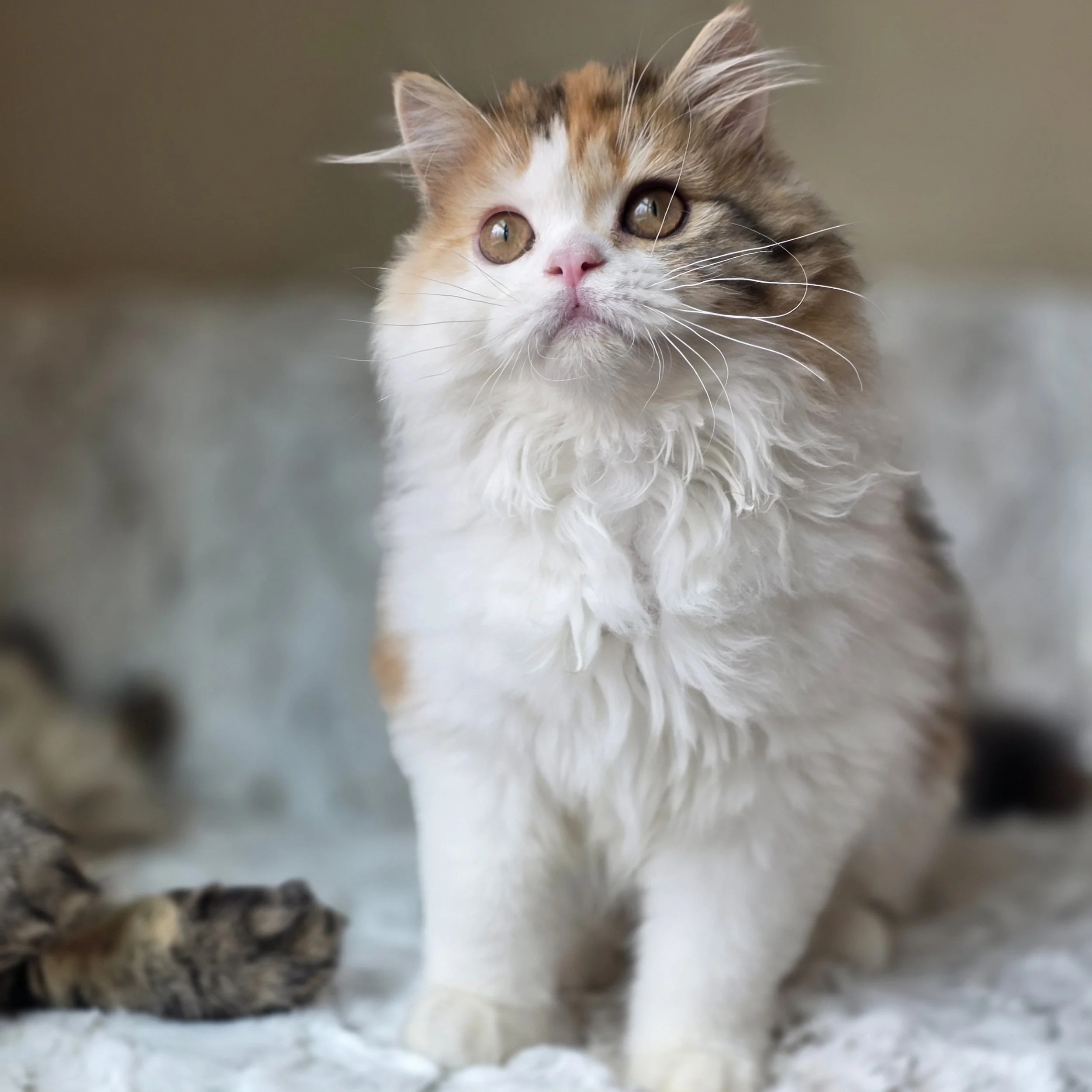
Complete Grooming Guide
Bathing a cat can seem intimidating, especially for first-time cat owners. While cats naturally groom themselves, there are situations where safe bathing becomes necessary for hygiene, coat care, and overall comfort.
At BestOfTheBest Kittens, we raise Scottish Fold, Scottish Straight, and British Shorthair cats and understand how important proper grooming and low-stress handling are for maintaining a healthy coat and positive grooming experience.
Can You Bathe a Cat?
Yes, cats can absolutely be bathed when necessary. Most healthy cats do a wonderful job grooming themselves daily, but some situations require additional care from owners or professional groomers. Bathing may help: Remove excess shedding undercoat Clean oily or dirty fur Improve hygiene Prepare cats for travel or shows Support coat maintenance in long-haired cats The key is keeping the process calm, safe, and gentle.
When a Cat May Need a Bath
Bathing is commonly recommended during: Heavy shedding seasons Dirty or greasy coat conditions Long-haired coat maintenance Matting or tangles Hygiene care for kittens Grooming preparation Medical or sanitary cleaning situations recommended by a veterinarian Not every cat requires frequent bathing, and grooming schedules depend on coat type, lifestyle, and individual needs.
Before Bathing: Brushing Is Essential
Before any bath, thoroughly brush the cat to remove loose fur and undercoat. This step is extremely important because it helps: Remove dead hair Reduce shedding Prevent tangles from tightening when wet Make drying easier and faster Improve shampoo penetration through the coat For long-haired cats, brushing before bathing is especially critical because wet mats become much more difficult and painful to remove later.
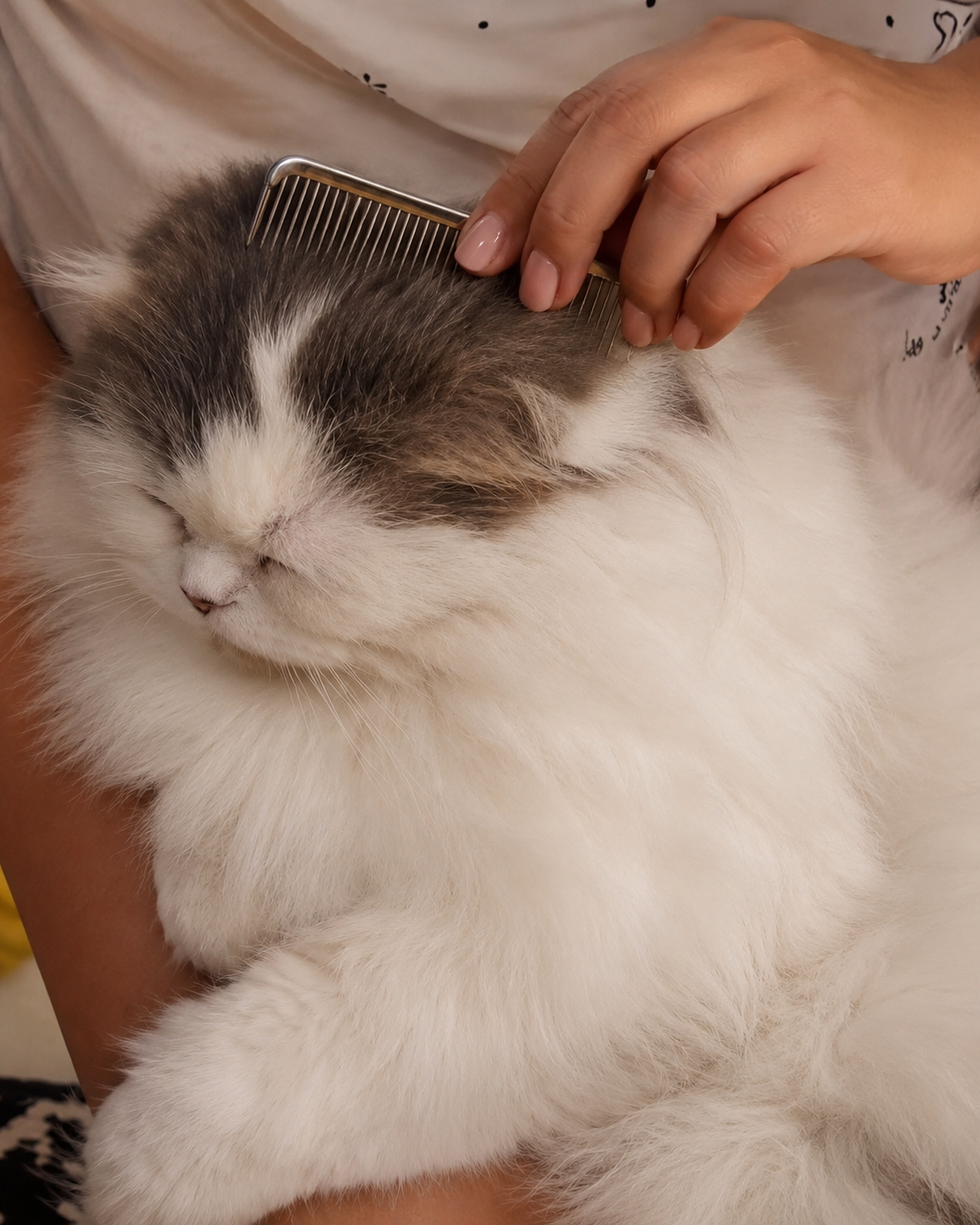
Breeder from BestOfTheBest Kittens carefully brushing a longhair Scottish Fold cat to maintain a healthy coat and reduce shedding during a calm grooming session.
Safe Handling During Bathing
Safety and calm handling should always come first. Professional breeders and groomers sometimes use grooming support tools to improve safety and reduce sudden movements during grooming sessions. These may include:
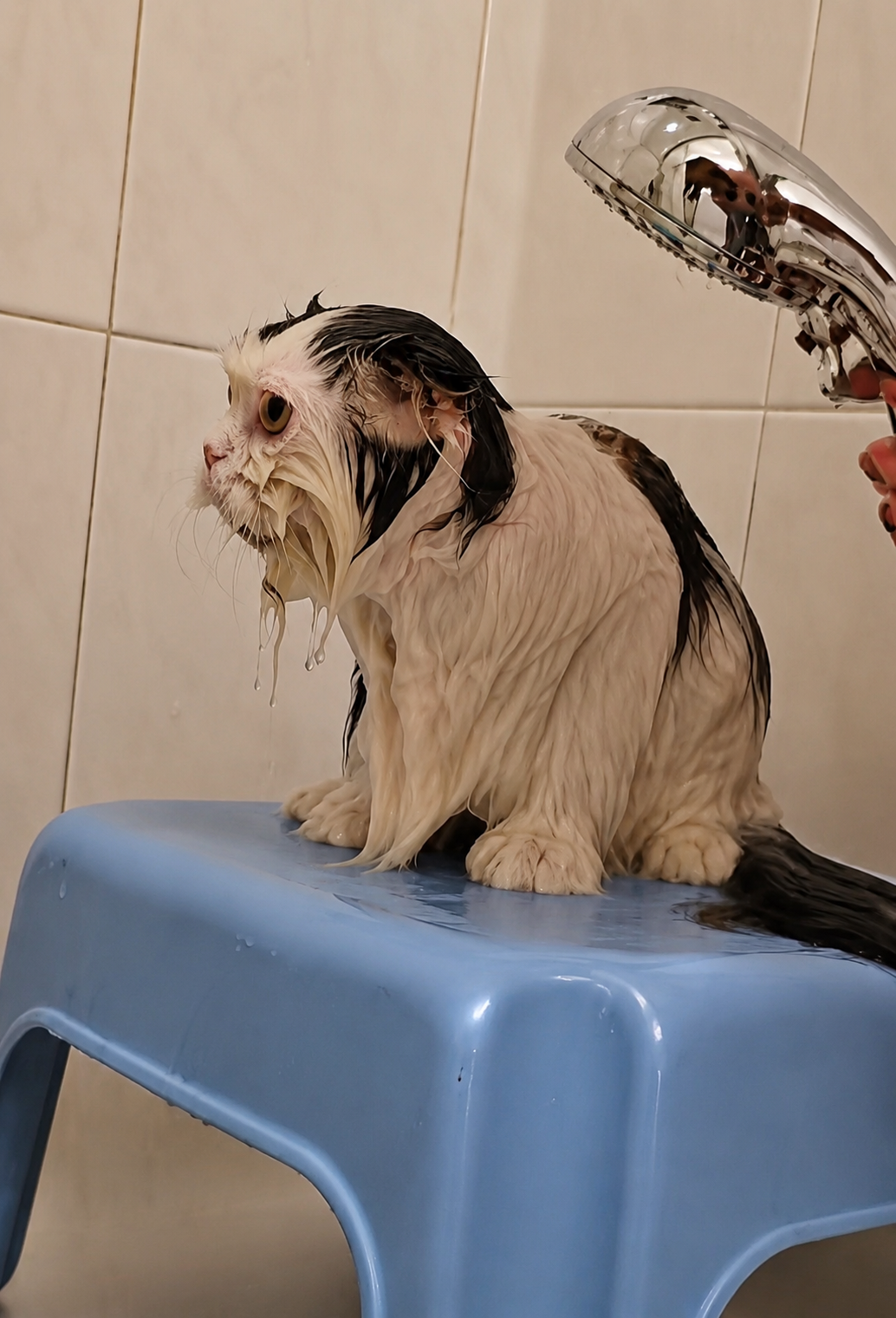
Professional breeder carefully bathing a wet longhair cat on a stable grooming chair in a walk-in shower using calm, low-stress grooming techniques.
Small Animal Harnesses
Soft rabbit-style harnesses or small pet harnesses may help gently control movement during grooming preparation, especially for kittens or nervous cats. The goal is not restraint through force, but safer and calmer handling.
Pet Grooming Bags
A grooming bag (cat grooming sack) may also be used for some cats during bathing or drying. These bags can: Reduce sudden scratching Help nervous cats feel more secure Improve handler safety Allow controlled washing Grooming tools should always be used gently and never in a stressful or forceful manner.
Bathing a Cat in a Walk-In Shower
A walk-in shower is often one of the safest and easiest ways to bathe a cat. Many breeders and experienced owners stay inside the shower with the cat to maintain calm control and reduce stress. A small stable plastic stool or grooming platform may be placed inside the shower to: Improve stability Reduce slipping Help the cat feel more secure This setup allows: Better control Safer movement Easier rinsing Less stress for the cat Always ensure: Warm (not hot) water Gentle water pressure Non-slip surfaces Calm environment Quiet handling
How to Bathe a Cat Safely
Basic bathing steps: Brush the coat thoroughly Prepare towels and supplies beforehand Use warm water only Wet the coat gradually Use cat-safe shampoo Avoid water inside ears and eyes Rinse completely Towel dry immediately Keeping sessions short and calm helps create a more positive experience.
Drying After Bathing
Proper drying is very important after bathing. Recommended steps: Towel dry thoroughly first Use a low-heat pet dryer if tolerated Keep the cat warm and draft-free Ensure the coat becomes fully dry Some cats tolerate dryers well, while others prefer quiet towel drying only. Never use excessive heat.
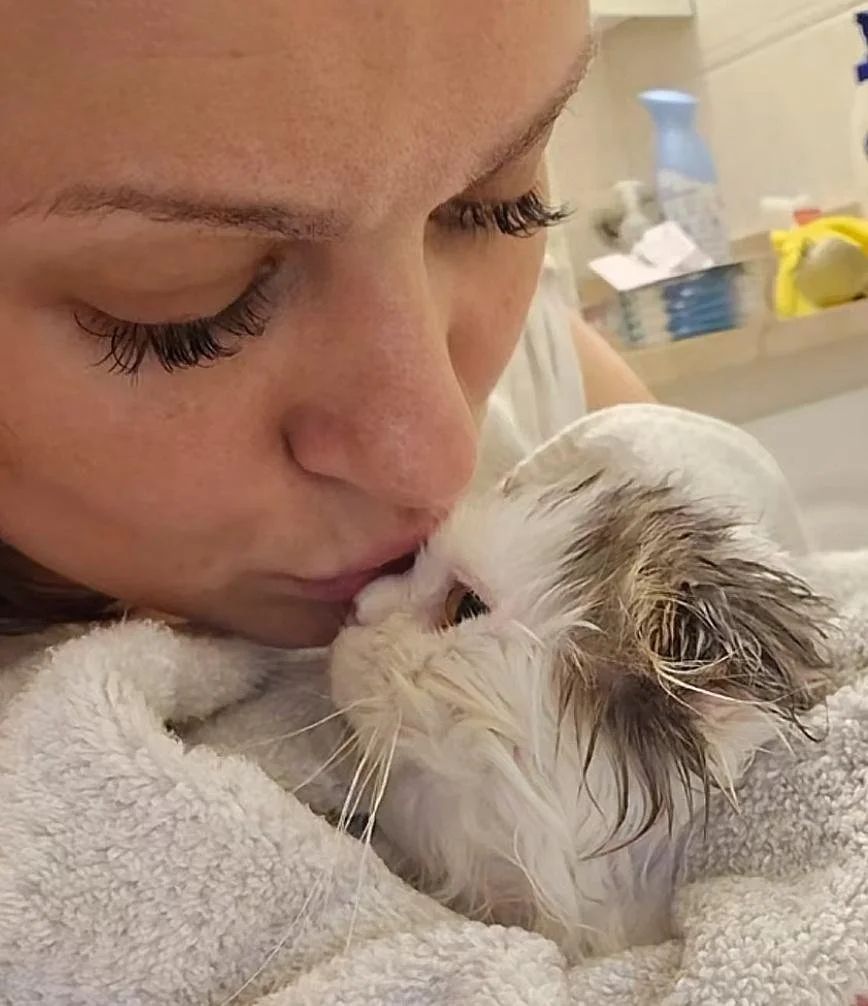
Longhair cat being carefully towel dried by a breeder after a bath to keep the coat warm, comfortable, and free from excess moisture.
Drying in a Carrier
Some breeders finish drying in a clean, well-ventilated carrier once the cat is mostly towel dried and calm. Important safety considerations: Carrier must remain dry and clean Good airflow is necessary Monitor carefully for overheating Keep the environment warm and quiet This method should only be used with supervision and for calm cats that tolerate the environment comfortably.
After Grooming Care
After grooming, place the cat in a warm quiet area with clean bedding to relax and fully settle. A calm recovery period helps: Reduce stress Maintain body temperature Prevent drafts Encourage relaxation Some cats may groom themselves afterward as part of their normal calming routine.
Important Safety Rules
The goal of bathing should always be: Calm handling Gentle restraint Low stress Safety for both cat and handler Never: Force a terrified cat into water Use harsh handling Use human shampoo Leave a wet cat cold or unattended Every cat has a different personality and tolerance level. Some cats adapt well to bathing, while others may require slower desensitization and patience.
Final Thoughts
Bathing can be a safe and helpful part of coat care when done correctly and gently. Proper preparation, brushing, calm handling, and safe drying methods all contribute to a more comfortable grooming experience. At BestOfTheBest Kittens, we focus on raising healthy, well-socialized Scottish Fold, Scottish Straight, and British Shorthair kittens while educating owners about proper grooming and care practices for long-term feline health and comfort.
Veterinary & Cat Care Resources
American Veterinary Medical Association (AVMA)
Good for veterinary wellness and pet care references.ASPCA Cat Care Guide
Helpful general cat care resource.International Cat Care
Excellent educational resource for stress reduction and cat behavior.AAFP – American Association of Feline Practitioners
Trusted feline health and behavior information.