Will my cat like to cuddle and be held?
One of the most common questions families ask when choosing a British Shorthair, Scottish Fold, or Scottish Straight kitten is simple:
The answer is a little more complicated than yes or no. These breeds can be wonderfully affectionate, but being affectionate does not necessarily mean wanting to be carried around all day.
Are British Shorthairs Cuddly?
British Shorthairs are often affectionate and strongly attached to their families, but many prefer to show their love on their own terms.
Your British Shorthair may follow you from room to room, sit beside you on the sofa, sleep near you, or supervise everything you do without necessarily wanting to spend hours in your arms.
Many British Shorthairs enjoy petting and attention but prefer having all four paws on a stable surface.
That doesn't make them less loving. They simply may have a more independent style of affection.
Do British Shorthairs Like to Be Picked Up?
Some do, while others would much rather sit next to you.
British Shorthairs develop into substantial, heavy-bodied cats, so being lifted and carried may not be their favorite activity.
If your British Shorthair doesn't enjoy being picked up, don't force it. Allowing a cat to choose when and how to interact usually builds more trust than insisting on physical affection.
Are Scottish Folds Affectionate?
Scottish Folds are generally known for being people-oriented, sweet and affectionate companions.
Many enjoy staying close to their owners and participating in everyday family life. Some happily curl up on a lap or enjoy being held, while others prefer sitting beside their person.
The famous folded ears don't determine personality. Every Scottish Fold is still an individual.
What About Scottish Straights?
Scottish Straights share the same Scottish breed background as Scottish Folds—the obvious difference is their upright ears.
They can be just as affectionate, playful and people-oriented as their folded-ear siblings.
In fact, Fold and Straight kittens from the same litter may have completely different personalities. One may become a dedicated lap cat while another prefers following you around the house.
Affectionate Doesn't Always Mean “Lap Cat”
This is probably the most important thing for future owners to understand.
A cat can adore you without wanting to sit in your lap.
Affection can look like:
Following you around the house
Sleeping beside you
Sitting nearby while you work
Greeting you when you come home
Rubbing against you
Purring during petting
Bringing toys or asking you to play
Choosing to stay in the same room with you
For many cats, simply choosing to be close to you is a very strong sign of attachment.
Does Early Socialization Matter?
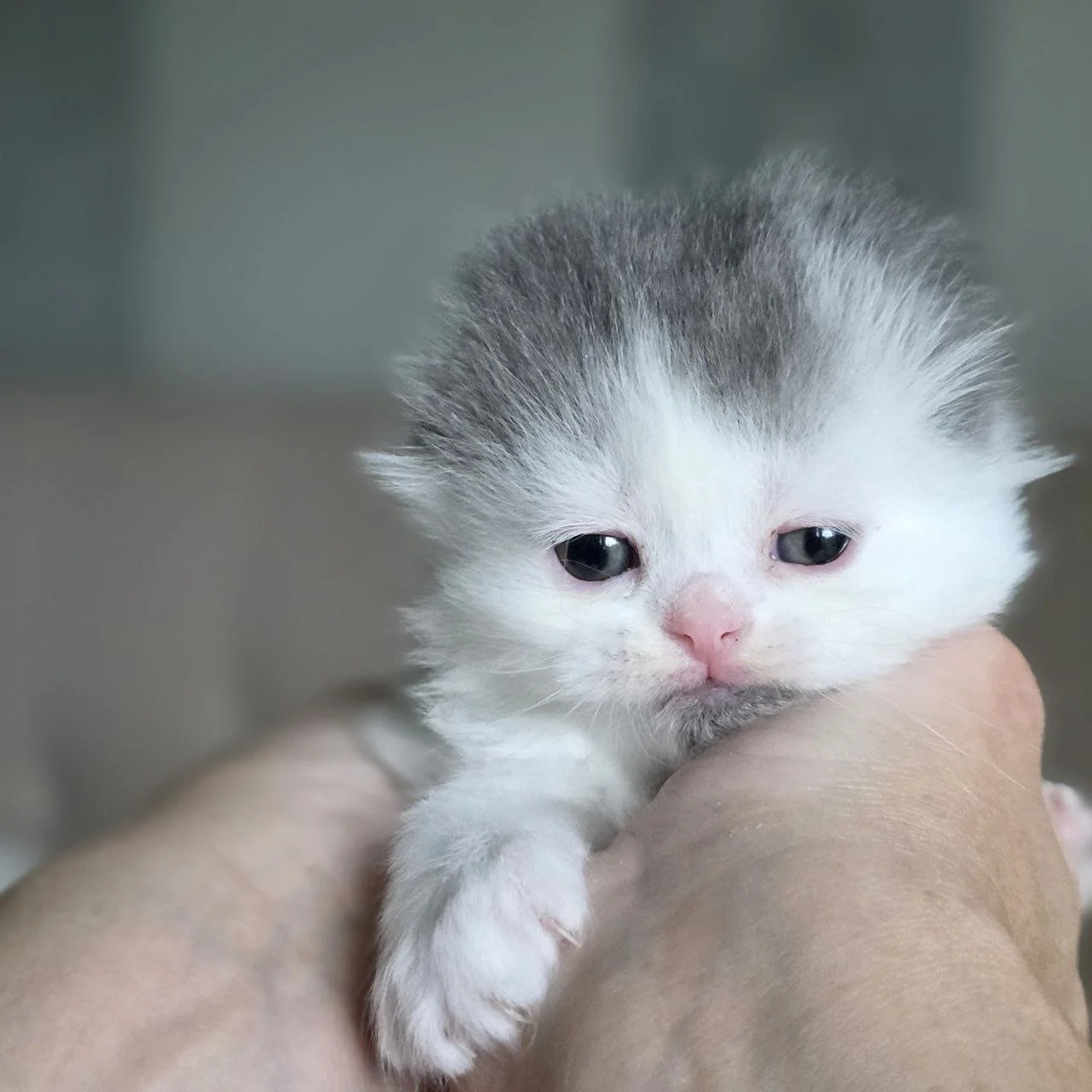
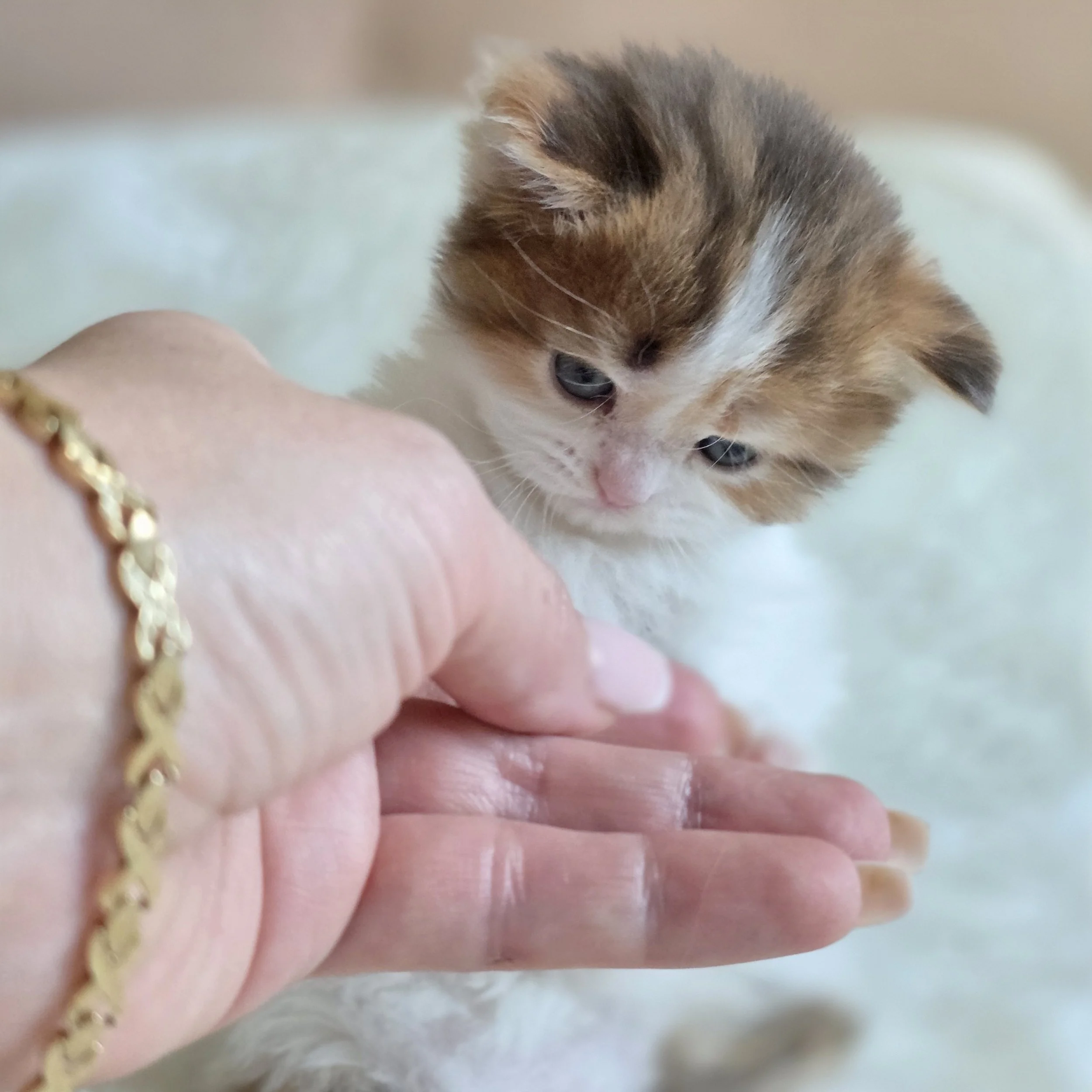
Yes. Positive experiences with people during kittenhood can help kittens become comfortable with normal household interaction and gentle handling.
At BestOfTheBestKittens, our kittens grow up accustomed to people and everyday home life. We want them to associate human interaction with safety and positive experiences.
However, good socialization doesn't turn every kitten into the same type of adult cat.
Genetics and individual temperament still matter.
Can You Choose the Most Cuddly Kitten?
We can observe a kitten's developing personality and tell families what we are seeing.
Some kittens consistently seek people out. Some love climbing into a lap. Others are extremely playful or more independent.
But no responsible breeder can guarantee that an eight- or twelve-week-old kitten will grow into an adult cat that wants to be held for hours every day.
Personality continues developing as a kitten matures and adjusts to its new family.
Which Is More Affectionate: British or Scottish?
There isn't a universal winner.
As a general tendency, Scottish cats may be more openly people-oriented, while many British Shorthairs show affection in a quieter, more independent way.
But individual personality matters more than a breed stereotype.
You may meet a British Shorthair who never wants to leave someone's lap and a Scottish Fold who prefers sleeping nearby instead.
Choose the Personality, Not Just the Ears
It's easy to fall in love with a particular coat color, those beautiful round eyes, or the tiny folded ears of a Scottish Fold.
But appearance is only part of choosing a companion who may share your home for many years.
If having an affectionate cat is especially important to your family, tell your breeder what you are looking for. A breeder who spends time with the kittens every day can help you choose based on temperament as well as appearance.
At BestOfTheBestKittens, we raise British Shorthair, Scottish Fold and Scottish Straight kittens and get to know their developing personalities as they grow.
The kitten that catches your eye may be beautiful.
The kitten whose personality fits your family is the one who can truly steal your heart.
Helpful Cat Care & Breed Resources
ASPCA Cat Care
https://www.aspca.org/pet-care/cat-care
Helpful general resource for cat care, behavior, safety, nutrition, and responsible pet ownership.International Cat Care
https://icatcare.org/
Evidence-based information about feline health, behavior, nutrition, stress, and welfare.Cat Friendly Homes – American Association of Feline Practitioners
https://catfriendly.com/
Feline-focused veterinary information covering health, behavior, preventive care, and creating a cat-friendly home.Cornell Feline Health Center
https://www.vet.cornell.edu/departments-centers-and-institutes/cornell-feline-health-center/health-information
Veterinary-school resource covering feline health, diseases, behavior, nutrition, and general cat care.The International Cat Association (TICA) – Scottish Fold
https://tica.org/breed/scottish-fold/
Breed information about Scottish Fold and Scottish Straight cats, including appearance, temperament, coat, and breed characteristics.Cat Fanciers’ Association (CFA) – Scottish Fold
https://cfa.org/breed/scottish-fold/
Breed information and standards for Scottish Fold and Scottish Straight cats.Cat Fanciers’ Association (CFA) – British Shorthair
https://cfa.org/breed/british-shorthair/
Authoritative information about British Shorthair appearance, development, coat, colors, and breed characteristics.